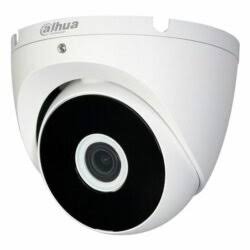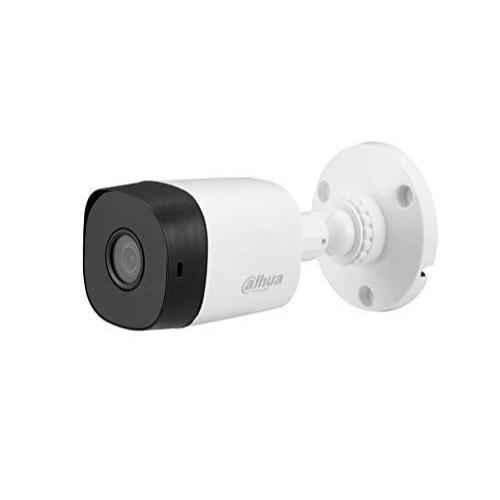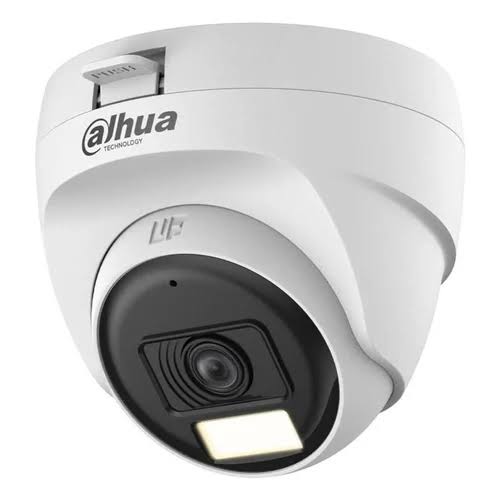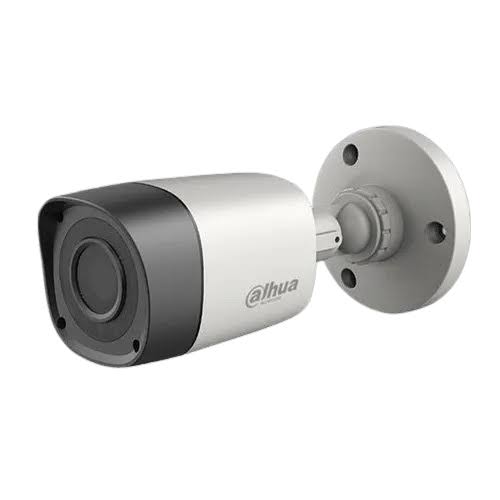
Save 24%
Select an image to view it. Click the main image to enlarge.
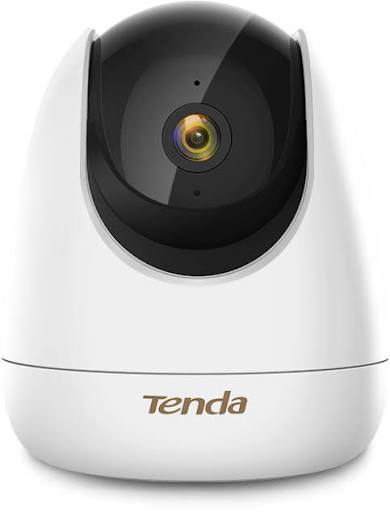
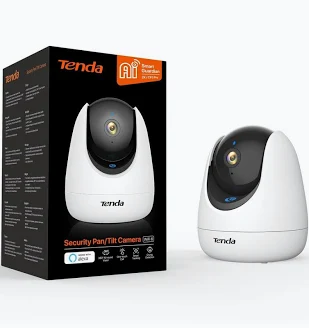
Tenda CP7 4MP smart Wi-Fi camera Price in Kenya
In stock
KES 3,399.00
KES 4,499.98
You save KES 1,100.98
Buy Tenda CP7 4MP smart Wi-Fi camera in Kenya. Compare verified features, compatibility, installation guidance and related equipment at Reisen.
View product detailsNeed help choosing?
Talk to our team at +254 714 804 532
Product details
Tenda CP7 4MP smart Wi-Fi camera
KENYAN BUYER GUIDE | MODEL-AWARE TECHNICAL REVIEW
Overview of Tenda CP7 4MP smart Wi-Fi camera
The CP7 4MP is an indoor pan-and-tilt camera whose positioning, wireless signal, power and storage settings determine the practical result. A camera that can rotate does not watch every direction simultaneously; presets, alerts and a suitable location remain important. Version-specific data matters because newer CP7 generations have different camera specifications.
Tenda’s CP7 4MP V1.0 documents give 2560 × 1440 video, H.264 compression, 2.4 GHz Wi-Fi, a 9 VDC input and microSD support up to 256 GB. Those figures are not interchangeable with the newer CP7 V2.0 5MP model.
The Reisen catalog snapshot lists this product at KSh 3,100. This is a displayed catalog price, not a promise about current stock, tax treatment or final delivery costs. Confirm the applicable price and package contents before checkout.
For model verification, consult the manufacturer documentation for CP7 V1.0 4MP. Source details describe the referenced model and hardware revision; compare them with the item supplied.
Buyer Benefits and Important Limitations
Resolution: 2560 × 1440 (4 MP). This property helps an installer decide whether the device suits the network, video, electrical or operational requirement. Its practical value depends on correctly matching the rest of the system and checking the actual supplied revision.
Video compression: H.264 (CP7 V1.0). This property helps an installer decide whether the device suits the network, video, electrical or operational requirement. Its practical value depends on correctly matching the rest of the system and checking the actual supplied revision.
Pan / tilt travel: 355° horizontal / 155° vertical. This property helps an installer decide whether the device suits the network, video, electrical or operational requirement. Its practical value depends on correctly matching the rest of the system and checking the actual supplied revision.
Wi-Fi: 2.4 GHz 802.11b/g/n. This property helps an installer decide whether the device suits the network, video, electrical or operational requirement. Its practical value depends on correctly matching the rest of the system and checking the actual supplied revision.
Local microSD: Up to 256 GB (V1 documentation). This property helps an installer decide whether the device suits the network, video, electrical or operational requirement. Its practical value depends on correctly matching the rest of the system and checking the actual supplied revision.

Technical Graphic — Product-specific illustration with verified details and clear buyer checks.
Practical Applications in Kenya
Small-site planning
Consider an indoor shop looking toward the counter and entrance. The main selection issue is indoor camera sightlines, not simply the advertised name or price. For Tenda CP7 4MP indoor pan-tilt camera, document the existing hardware, the site conditions and the exact operational requirement before ordering. Where the item is only one component of a larger installation, specify the upstream and downstream equipment and the person responsible for configuration. If an important rating is absent from the listing, obtain it from the product label or manufacturer rather than relying on a seller’s generalized description. Record a test that would prove the finished installation solves the customer’s problem, and include it in the handover checklist.
Professional deployment
Consider a home interior where privacy and notification settings matter. The main selection issue is privacy and remote viewing, not simply the advertised name or price. For Tenda CP7 4MP indoor pan-tilt camera, document the existing hardware, the site conditions and the exact operational requirement before ordering. Where the item is only one component of a larger installation, specify the upstream and downstream equipment and the person responsible for configuration. If an important rating is absent from the listing, obtain it from the product label or manufacturer rather than relying on a seller’s generalized description. Record a test that would prove the finished installation solves the customer’s problem, and include it in the handover checklist.
Upgrade and replacement
Consider a classroom or reception area with suitable permissions. The main selection issue is V1-versus-V2 specification, not simply the advertised name or price. For Tenda CP7 4MP indoor pan-tilt camera, document the existing hardware, the site conditions and the exact operational requirement before ordering. Where the item is only one component of a larger installation, specify the upstream and downstream equipment and the person responsible for configuration. If an important rating is absent from the listing, obtain it from the product label or manufacturer rather than relying on a seller’s generalized description. Record a test that would prove the finished installation solves the customer’s problem, and include it in the handover checklist.
Service and procurement
Consider a small office monitoring a corridor and shared entrance. The main selection issue is local storage choice, not simply the advertised name or price. For Tenda CP7 4MP indoor pan-tilt camera, document the existing hardware, the site conditions and the exact operational requirement before ordering. Where the item is only one component of a larger installation, specify the upstream and downstream equipment and the person responsible for configuration. If an important rating is absent from the listing, obtain it from the product label or manufacturer rather than relying on a seller’s generalized description. Record a test that would prove the finished installation solves the customer’s problem, and include it in the handover checklist.
Engineering and Compatibility Considerations
Pan-and-tilt coverage is a moving viewpoint
The CP7 V1.0 supports a 355-degree horizontal travel range and 155-degree vertical travel range. That allows useful changes in direction, but the camera still has one lens viewing one direction at a time. Set suitable presets and align the initial field of view with the most valuable entry, counter or circulation area.
The exact hardware version matters
The CP7 name now appears on different revisions. The 4MP V1.0 documentation lists 2560×1440 recording, H.264 compression, 2.4 GHz Wi-Fi and 9 VDC input. Newer 5MP CP7 V2.0 documents specify different hardware and codec features. Do not copy a storage limit, adapter rating or video-codec claim between versions without checking the supplied unit.
Network reliability and app access
A camera near the edge of Wi-Fi coverage can repeatedly disconnect or show delayed alerts even when it looks fine on the phone in the same room. Place the device where both the view and the 2.4 GHz signal are adequate. If using Ethernet, test that the camera reaches the app and desired recording service before permanent mounting.

Compatibility Matrix — Verify ports, input ratings, wiring standards, and exact-model support before ordering.
Understanding Ratings, Capacity, and Real-World Performance
Published ratings are valuable when they describe a known exact model or a verifiable catalog measurement. They are not interchangeable with real deployment outcomes. A channel count does not guarantee playback performance, a port count does not certify power delivery, a cable length is not a tested transmission reach, and a nameplate current is not an endorsed continuous field load. Read each number in the context of its measured quantity and operating conditions.
For Tenda CP7 4MP indoor pan-tilt camera, the most important distinction is indoor camera sightlines versus privacy and remote viewing. An installation should be sized for the actual requirement rather than assuming the highest headline value is always achievable. Keep the exact model and physical revision on the final bill of materials, and use a test that verifies the customer’s expected result.

Verified Data — A manufacturer-grounded comparison or clear disclosure that numerical measurements are unavailable.
Installation Planning and Commissioning
Privacy and storage decisions
Decide whether footage will be stored on microSD, in an available cloud service or through supported network recording integration. The CP7 V1.0 documentation lists microSD support up to 256 GB; actual retention depends on video settings and recording behavior. Check subscription requirements and data-processing policies before enabling cloud functions.
Indoor placement and practical limitations
The CP7 V1.0 is marketed for indoor use. Do not install it outdoors without a separately documented weather-protection system and appropriate environmental ratings. Avoid pointing directly at windows or strong backlights, and make sure cabling cannot be unplugged easily in a public area.

Planning Relationships — Three interdependent installation checks; circle sizes represent no measured performance.
How to Set Up Tenda CP7 4MP smart Wi-Fi camera
Use the procedure below as a structured planning and commissioning framework for Tenda CP7 4MP indoor pan-tilt camera. It is not a substitute for the exact equipment manufacturer’s manual, electrical safety rules or a competent installer’s site assessment. Where the catalog does not state a rating, resolve that missing information before carrying out the affected step.
A Step by Step Guide to Set Up Tenda CP7 4MP smart Wi-Fi camera
1. Identify V1 hardware. Check that the supplied item is CP7 4MP, not CP7 V2.0 5MP.
2. Choose an indoor viewpoint. Mount the camera where motion and privacy needs can be served responsibly.
3. Verify the adapter. Use the correct 9 VDC input stated for CP7 V1.0.
4. Connect network access. Pair the camera with adequate 2.4GHz Wi-Fi or a supported wired connection.
5. Configure alerts. Set sensible detection areas, notifications and patrol behavior.
6. Choose recording. Insert a suitable microSD within the listed V1 limit or evaluate a supported cloud plan.
7. Review privacy/security. Set account credentials, firmware and household permission settings.
8. Test actual outcomes. Verify live view, alerts, PTZ preset operation and playback before deployment.

Decision Wheel — Four purchasing checkpoints presented as categories rather than invented performance percentages.
Comparisons and Alternative Buying Decisions
The simplest useful comparison is not a list of unrelated brands. Compare required port or channel count, wiring method, electrical standards, mounting, configuration and the cost of the complete installation. A part is only an alternative when it actually solves the same problem.
For a related option within the Reisen catalog, compare a Dahua 2MP bullet IP camera alternative. Check the two product types against the same requirement rather than assuming either is interchangeable.
When assessing alternatives to Tenda CP7 4MP indoor pan-tilt camera, compare total installed cost as well as the advertised purchase price. Depending on the category, that can include cabling and termination work, proper power distribution, managed network equipment, compliant accessories, storage, installation labor and ongoing support. The right option is the one with documented compatibility and room for the site’s actual growth.

How to Buy — Model-specific checks to complete before purchasing and commissioning.
Key Specifications
|
Specification |
Verified value or explicit limit |
|
Resolution |
2560 × 1440 (4 MP) |
|
Video compression |
H.264 (CP7 V1.0) |
|
Pan / tilt travel |
355° horizontal / 155° vertical |
|
Wi-Fi |
2.4 GHz 802.11b/g/n |
|
Local microSD |
Up to 256 GB (V1 documentation) |
|
External power |
9 VDC, 1 A |
|
Network port |
10/100 Mbps RJ45 |
What's in the Box
|
Item |
Manufacturer / pack status |
|
Main product or ordered cable quantity |
Confirm exact unit, length or pack on delivery |
|
Power adapter, connectors, brackets, disks and documentation |
Not established by this catalog; confirm item by item |
Recommended Accessories and Related Products
Choose supporting components only after checking the exact interfaces and ratings. A relevant accessory can reduce installation labor or simplify maintenance, but a product category name is not compatibility certification. The right accessories may include properly terminated cabling, model-specific mounts, rated power hardware, storage, or appropriate network switching depending on this product’s actual role.
When planning the full system, start with a compact Ethernet switch for wired networking. That listing can help identify a complementary item or a sizing alternative, subject to separate compatibility confirmation.
You can also review the 64-channel Dahua NVR for larger IP systems. Its usefulness depends on your actual wiring scheme and the difference between product categories.
For a system requiring standards-based powering of compatible network endpoints, browse CCTV PoE switches in Kenya. The switch must meet the device’s PoE class and total power-budget requirements.
Troubleshooting and Long-Term Maintenance
Commissioning and household use
Set a strong account password, install updates from official channels, test detection notices and pan/tilt presets, and verify playback from the chosen storage method. Discuss camera visibility and privacy with occupants. A remote app view is valuable, but not a substitute for a clear local response plan when an alert is received.
Keep a simple service record for Tenda CP7 4MP indoor pan-tilt camera: purchase reference, part number, serial or batch where supplied, last verification, installation point, cable endpoints and the first observable symptom of any failure. Diagnostic notes should identify which part of the complete system has been tested, rather than immediately blaming the newest device. This approach reduces unnecessary part replacements and helps a supplier provide meaningful support.
Frequently Asked Questions
Is the CP7 a 4MP camera?
The CP7 V1.0 is documented as 4MP with 2560×1440 resolution; newer CP7 V2.0 material describes a different 5MP unit. Check the supplied label.
Can it be used outdoors?
The CP7 4MP V1.0 is described for indoor scenarios. Do not infer an outdoor IP rating.
Does it have built-in Wi-Fi?
Yes, the CP7 V1.0 manufacturer sheet lists 2.4 GHz 802.11b/g/n wireless access.
Does it support Ethernet?
The V1.0 documentation lists one 10/100Mbps RJ45 interface for wired connection.
What size microSD card works?
Tenda lists support for up to 256GB for CP7 V1.0, subject to card suitability and configuration.
Does it use H.265?
The 4MP CP7 V1.0 specifications list H.264. Do not copy H.265 from the newer 5MP V2 model.
Will it track every person automatically?
The product may offer supported tracking features, but real detection depends on camera settings, lighting and scene conditions. It does not guarantee perfect identification or coverage.
What power adapter does it require?
CP7 V1.0 documentation lists 9VDC 1A input. Do not substitute another revision’s adapter specification.
Buying Summary
Buy Tenda CP7 4MP indoor pan-tilt camera for a clearly defined installation need, not for the most attractive headline rating. Cross-check the confirmed information in the table, the relevant model documentation, and the site-specific prerequisites. If the listing lacks the exact manufacturer part number, obtain it in writing before using unverified specifications in a formal quotation. A sound purchase leaves the installer able to explain both why the product suits the work and what would cause it to be rejected at delivery.
Field Planning Notes Before Ordering
A version check should be part of the installation appointment rather than an afterthought. Photograph the label, confirm the model and compare it to CP7 V1.0 documentation before choosing the memory card, power supply and video settings. The V1.0 4MP camera uses H.264 and has different specifications from the later 5MP version. This matters when an installer prepares instructions for the owner or promises compatibility with third-party recording tools. Present any external integration as something to test with the actual firmware, not as guaranteed because a networking protocol appears in a general datasheet.
A privacy-aware commissioning plan can also improve customer satisfaction. Put the camera where the most important entry or room can be seen from its default position, select a limited set of useful patrol presets and demonstrate that notifications arrive on the authorized phone. Explain how a changing pan position affects what is visible at any moment. If microSD is used, confirm that the camera records and that the owner can retrieve a sample clip. If cloud storage is offered, disclose that service costs and processing terms require separate review. Keep the 9 VDC V1 power requirement visible in the handover notes.
For Tenda CP7 4MP indoor pan-tilt camera, the buying decision is strongest when the installer links each promised capability to a manufacturer specification and each installation outcome to a documented test. Keep that evidence with the final quotation, even when the equipment appears simple to configure.
Additional information
| Product | Tenda CP7 4MP smart Wi-Fi camera Price in Kenya |
|---|---|
| Category | CCTV Security Cameras |
| Price | KES 3,399.00 |
| Availability | In stock |
Keep exploringMore in CCTV Security Cameras
Related products